Sender Help Center
  • Home
  • Pricing
  • Knowledgebase
  • Log In
  • Get Started
Menu
Sender Help Center
Close menu
Home Pricing Knowledgebase
Log In Get Started
Floating Floating Floating Floating Floating

Knowledge Base

Search
  • Authenticate your domain
  • Automation
  • Drag & Drop Email Editor
  • Getting started with deliverability
  • Getting started with Sender
  • Integrations
  • Manage contacts
  • Payment & Billing
  • SMS campaigns
  • Subscription forms
Knowledge Base
FAQ Contact Us
Home/Knowledge Base/

Your Guide to the New Sender Dashboard

Last Updated: Nov 21, 2025

The new dashboard provides a comprehensive view of all your marketing performance in one place. 

Key features

  • All-in-one performance view for emails and SMS
  • Sales performance tracking with revenue breakdown
  • Traffic and reach analytics
  • Best-performing email campaigns overview
  • Subscriber growth monitoring with detailed insights
  • Personalized marketing recommendations
  • Integrated marketing calendar
  • Export functionality for all reports

Dashboard components

At the top of your dashboard, you’ll find controls to customize your view:

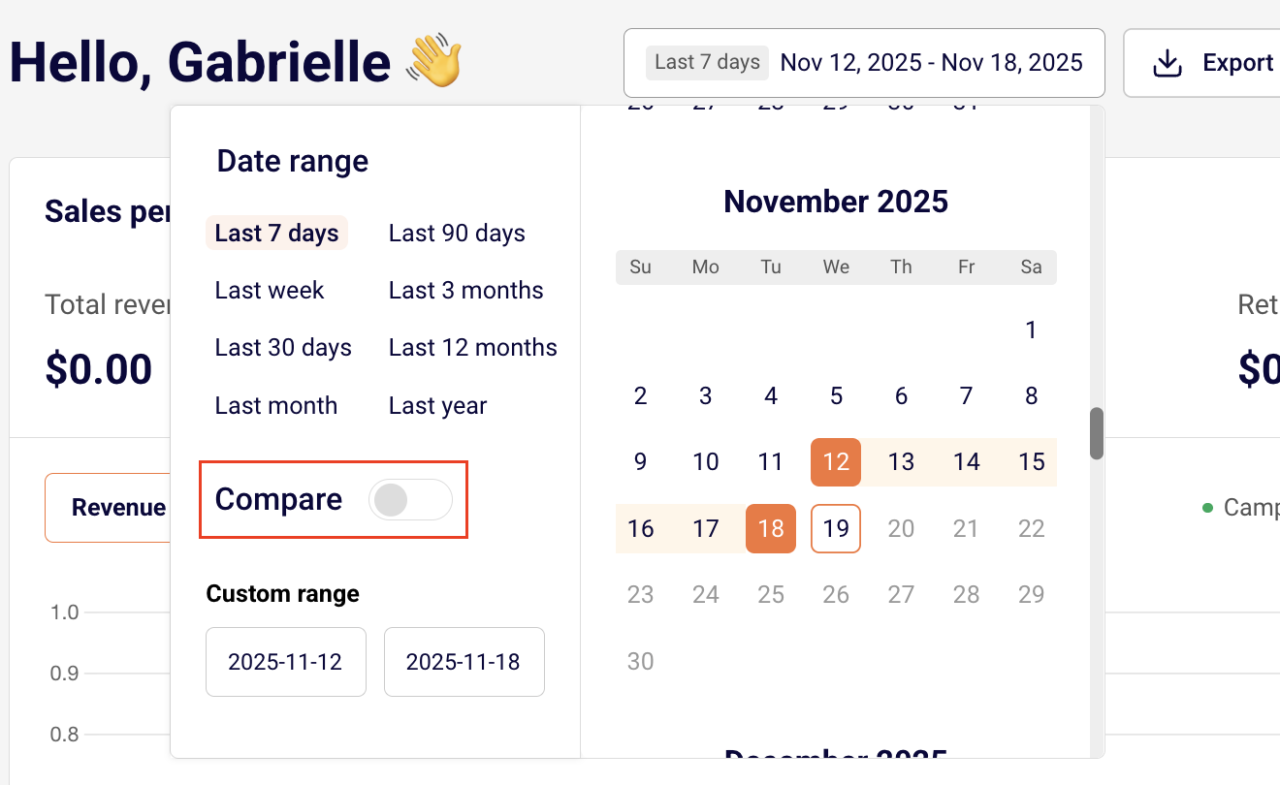
  • Report timeframe selector – Choose the date range you want to analyze
  • Export action – Download your reports as PDF files for external analysis or sharing with your team.
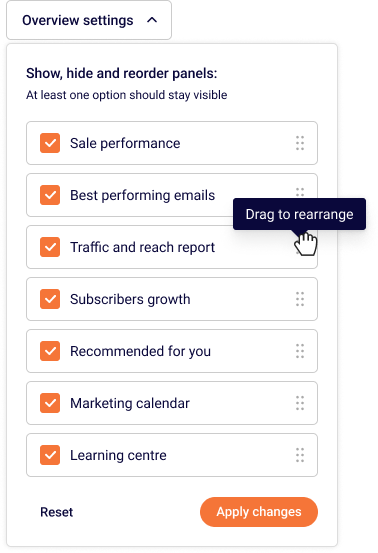
  • Overview settings – you can customize the layout of your dashboard by dragging and dropping sections to organize it exactly how you want. You can also exclude sections from the dashboard that you feel are irrelevant to you by unticking the boxes.

Sales performance section

Sales performance tracking requires integration with Shopify, WooCommerce, PrestaShop, or another supported e-commerce platform. If you haven’t connected your store yet, click here to learn how.

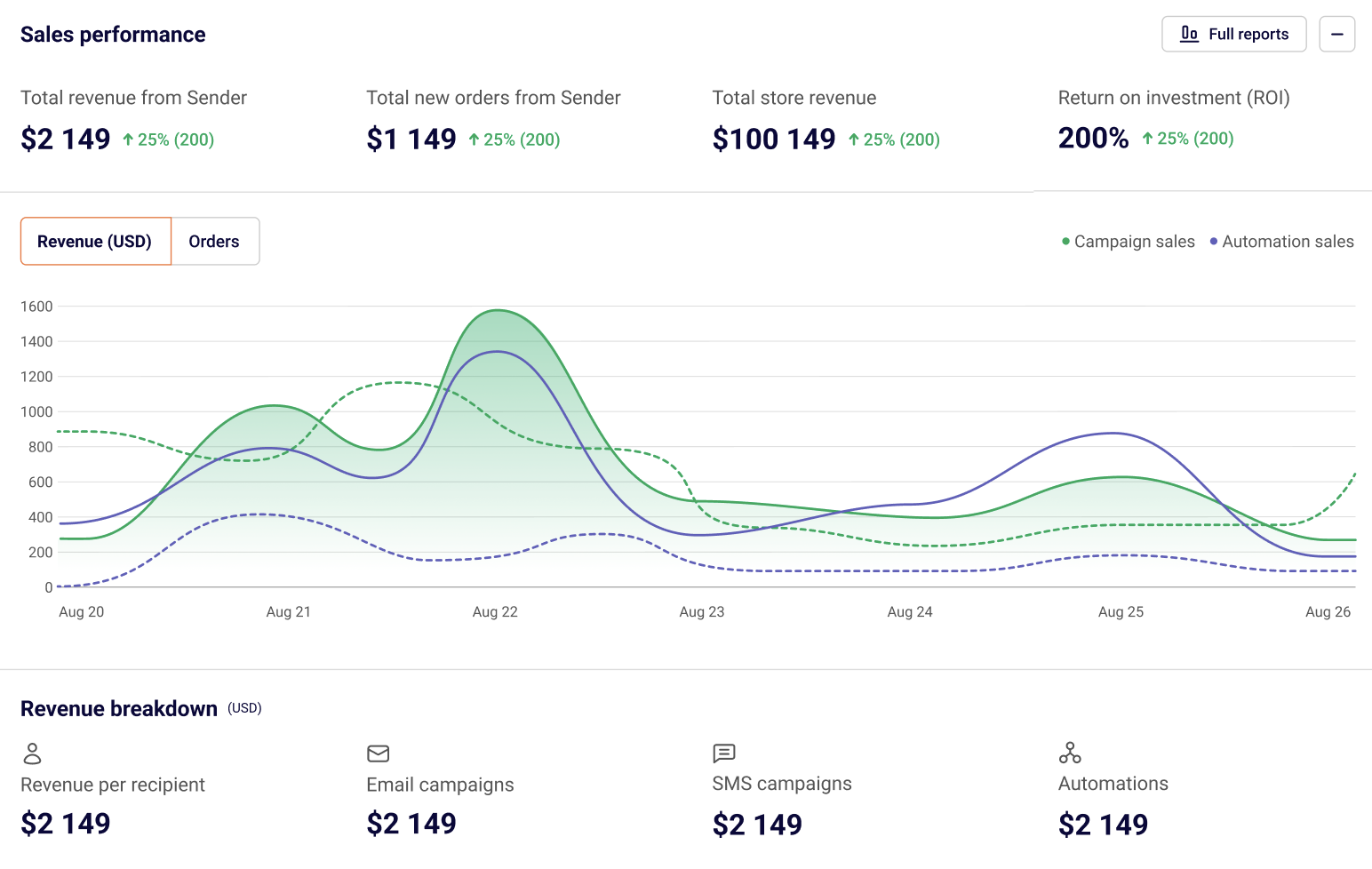
The sales performance section displays four critical metrics at the top:

  • Total revenue from Sender – Revenue generated through your Sender campaigns and automations
  • Total new orders from Sender – Number of orders attributed to your campaigns and automations
  • Total store revenue – Your complete store revenue for comparison
  • ROI (Return on Investment) – Percentage return showing how much revenue you’re generating per dollar spent

The main chart displays your revenue trends over time with two visualization options:

  • Revenue (USD) tab – Shows dollar amounts
  • Orders tab – Shows number of orders

The chart uses color-coding to distinguish between campaign sales and automation sales, making it easy to see which type of messaging drives more revenue.

Hover your mouse over any specific day on the chart to see:

  • Total revenue for that day
  • How much revenue came from campaigns
  • How much revenue came from automations

This daily breakdown helps you identify which days perform best and understand the contribution of each channel.

Revenue Breakdown

Below the main metrics, you’ll find a detailed breakdown showing exactly where your revenue is coming from:

  • Revenue per recipient – Average revenue generated per contact
  • Email campaigns – Revenue from your scheduled email campaigns
  • SMS campaigns – Revenue from your text message campaigns
  • Automations – Revenue from automated workflows

This breakdown helps you identify which channel is performing best and where to focus your efforts.

Enable comparison mode to analyze how your current performance stacks up against previous periods. For example, compare the last 30 days with the previous 30 days to identify growth trends or areas needing improvement.

Best performing emails section

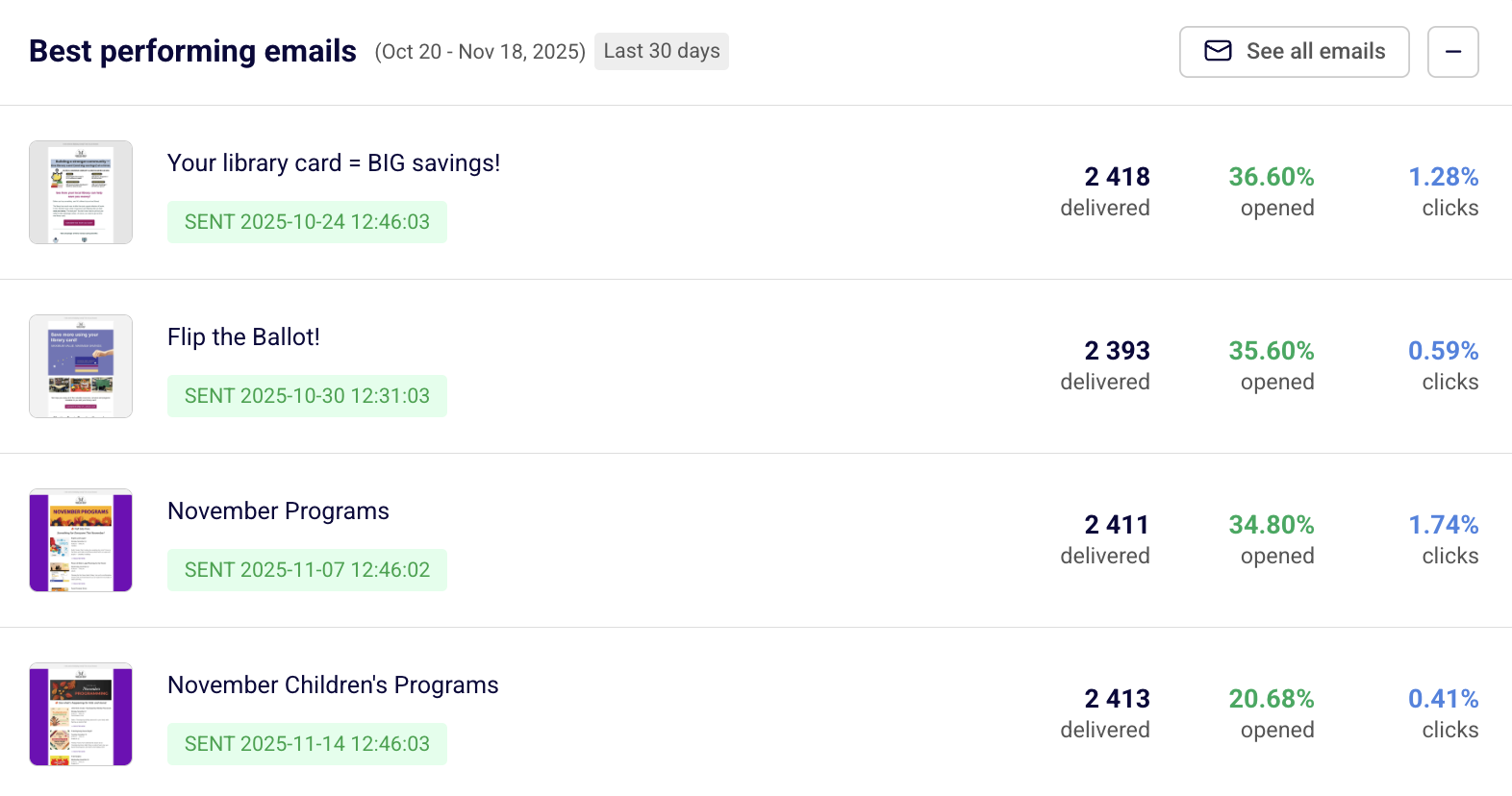
This section highlights your top-performing email campaigns during the selected timeframe.

NOTE: If you have an e-commerce store connected, campaigns are ranked by sales generated. If you haven’t integrated an e-commerce platform, campaigns are ranked by clicks.

Each campaign entry displays:

  • Campaign thumbnail – Visual preview of the email
  • Campaign subject line – The subject line used
  • Send date and time – When the campaign was sent, shown with a green “SENT” label
  • Sales – Total revenue generated
  • Orders – Number of orders placed
  • Delivered – Number of emails successfully delivered
  • Opened – Open rate percentage
  • Clicks – Click rate percentage

Click “See all emails” in the top right corner to view your complete campaign list and dive deeper into individual campaign performance.

Use this insight to identify what content resonates most with your audience and replicate successful strategies.

Traffic and reach report

This report applies to email campaigns only.

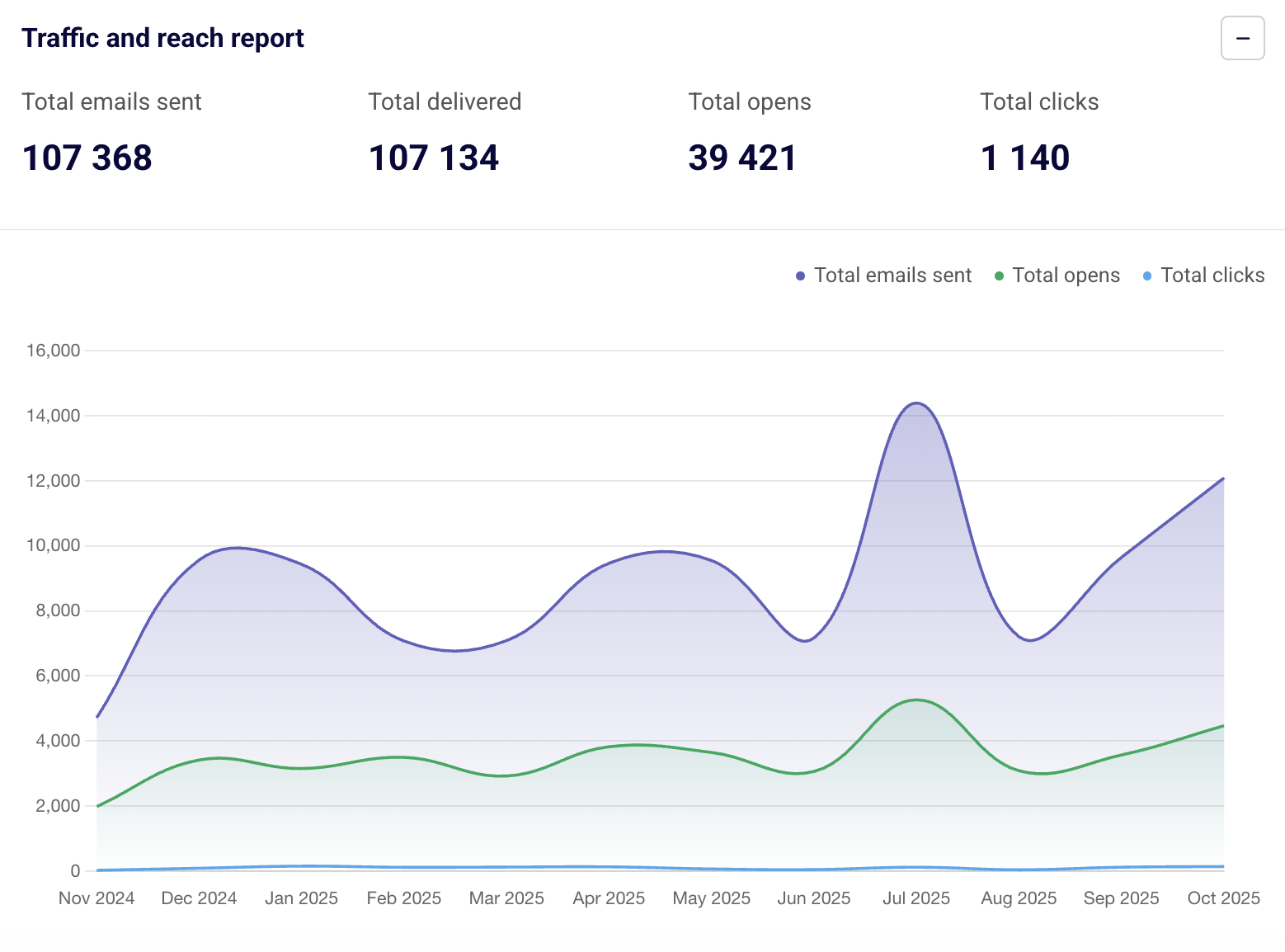
The traffic and reach section shows engagement metrics for all emails sent during your selected period. Track how many people are clicking through your campaigns and opening your messages.

At the top of this section, you’ll see four primary metrics:

  • Total emails sent – All emails sent during the period
  • Total delivered – Successfully delivered emails
  • Total opens – Number of times emails were opened
  • Total clicks – Number of clicks on links in your emails

The main chart displays three trend lines over time showing total emails sent, total opens, and total clicks. This visualization helps you understand engagement patterns and identify peaks in your email activity.

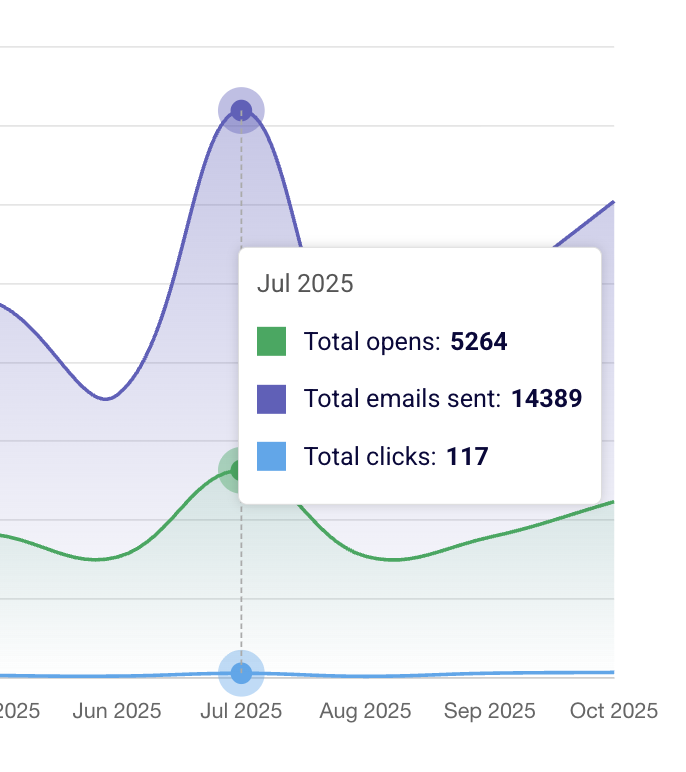
Hover over any day/week/month (depending on your selected period length) on the chart to see detailed insights showing opens generated by campaigns versus opens generated by automation emails. 

This helps you understand whether your scheduled campaigns or automated workflows are driving more engagement.

Just like the sales performance section, you can compare your current traffic stats with previous time periods to measure improvement.

Below the chart, you’ll find important email health metrics that help you monitor the health of your email list and identify potential deliverability issues:

  • Total unsubscribers – People who opted out
  • Total bounces – Emails that couldn’t be delivered
  • Bounce rate – Percentage of bounced emails
  • Total spams – Spam complaints received
  • Unsubscribe rate – Percentage of people who unsubscribed
  • Hard bounce rate – Permanent delivery failures
  • Soft bounce rate – Temporary delivery issues
  • Average spam rate – Average spam complaint rate

Subscribers growth section

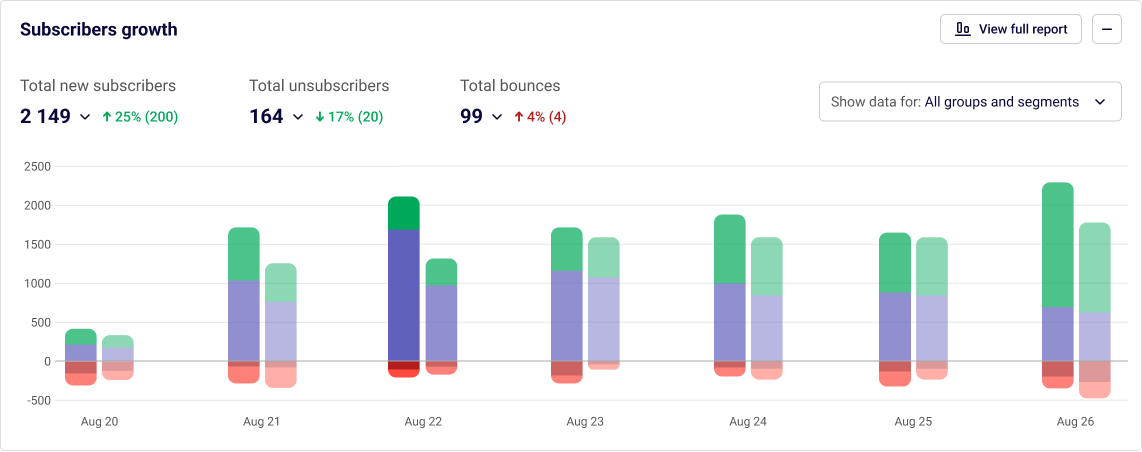
Monitor how your email list is growing over time with detailed daily insights.

At the top of this section, you’ll see three summary metrics with percentage changes compared to your selected comparison period:

  • Total new subscribers – Contacts added during the period, with a green arrow indicating growth
  • Total unsubscribers – People who opted out, with the change indicator
  • Total bounces – Email addresses that bounced, with the change indicator

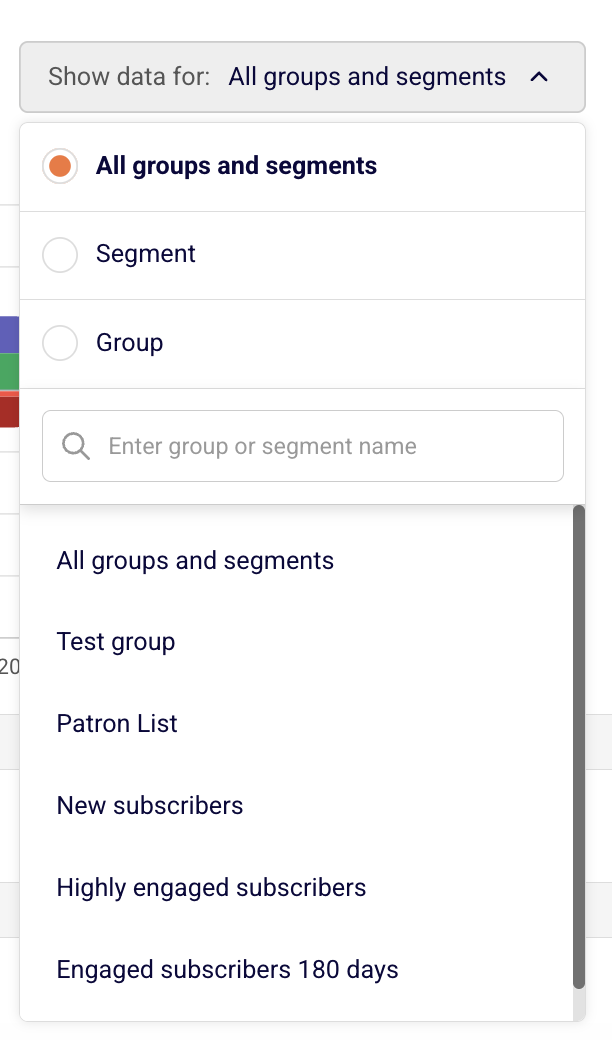
Use the “Show data for” dropdown to filter your subscriber growth by:

  • All groups and segments – View overall list growth
  • Segment – Filter by a specific segment you’ve created
  • Group – Filter by a specific contact group

When you select a filter option, a search field appears where you can type to find specific groups or segments from your list. This filtering capability helps you understand which segments are growing fastest and where your best subscribers are coming from.

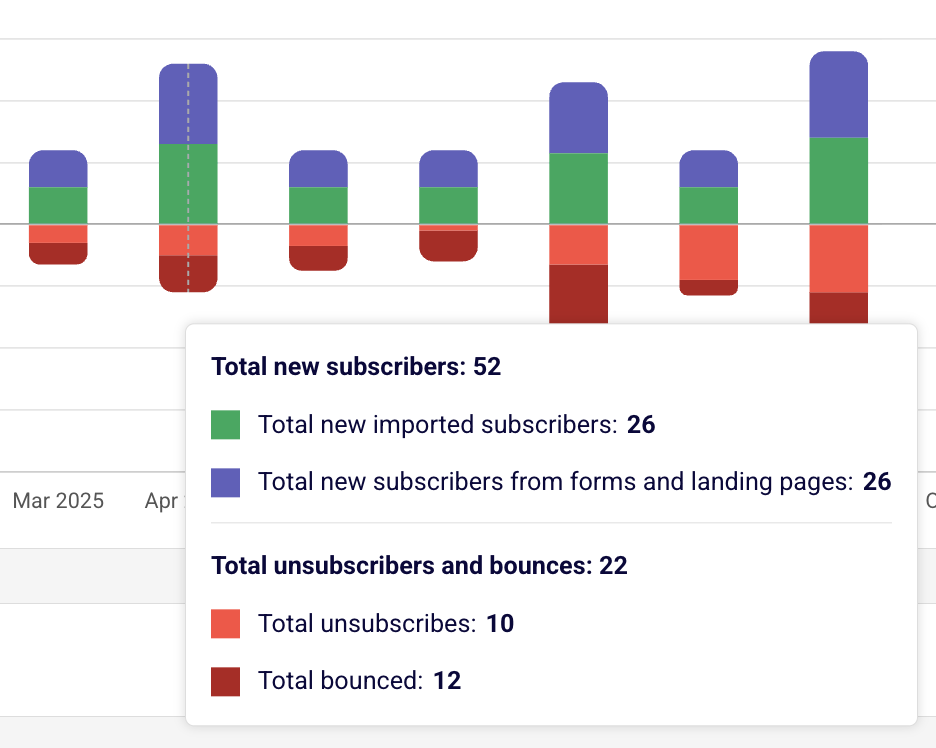
The stacked bar chart displays your net subscriber growth over time. Each bar uses color-coding to show new subscribers, existing subscribers, and losses from unsubscribes and bounces. This visualization makes it easy to spot trends and see the overall health of your list.

Hover your mouse over any specific day to see a detailed breakdown:

  • Imported subscribers – Contacts added through manual imports or integrations
  • New subscribers from forms & landing pages – Organic growth from your signup forms
  • Bounces – Email addresses that bounced 
  • Unsubscribes – People who opted out of your list

This daily breakdown helps you identify your most effective acquisition channels and spot potential issues with list quality.

Recommendations section

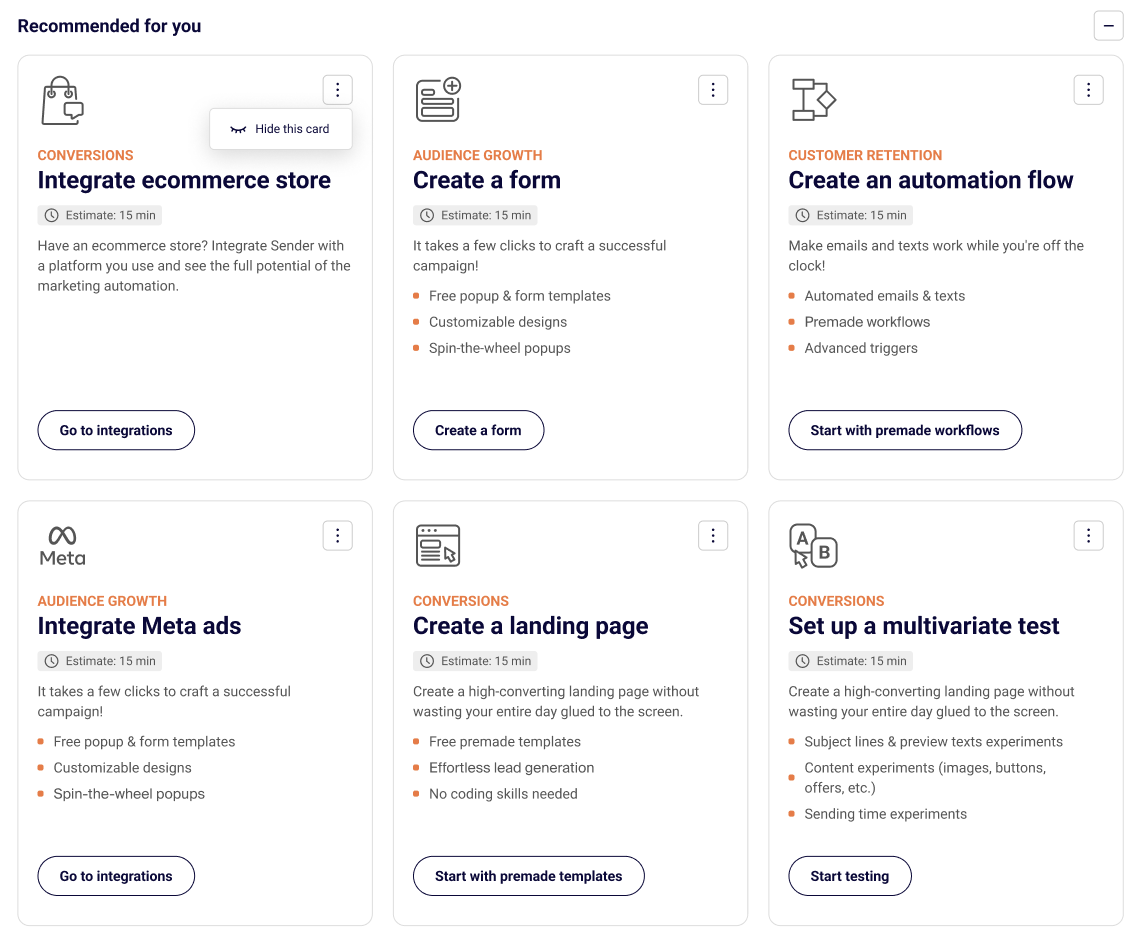
Get personalized suggestions to maximize your email marketing performance under the “Recommended for you” heading. Sender analyzes your account activity and provides actionable recommendations tailored to your needs.

Each recommendation card includes:

  • Category tag – The focus area such as “Conversions”, “Audience growth”, or “Customer retention”
  • Action title – What you should do
  • Time estimate – How long it will take to complete
  • Description – Why this matters and what you’ll achieve
  • Key features – Bulleted list of what’s included or what you can do
  • Action button – Direct link to get started

Marketing calendar

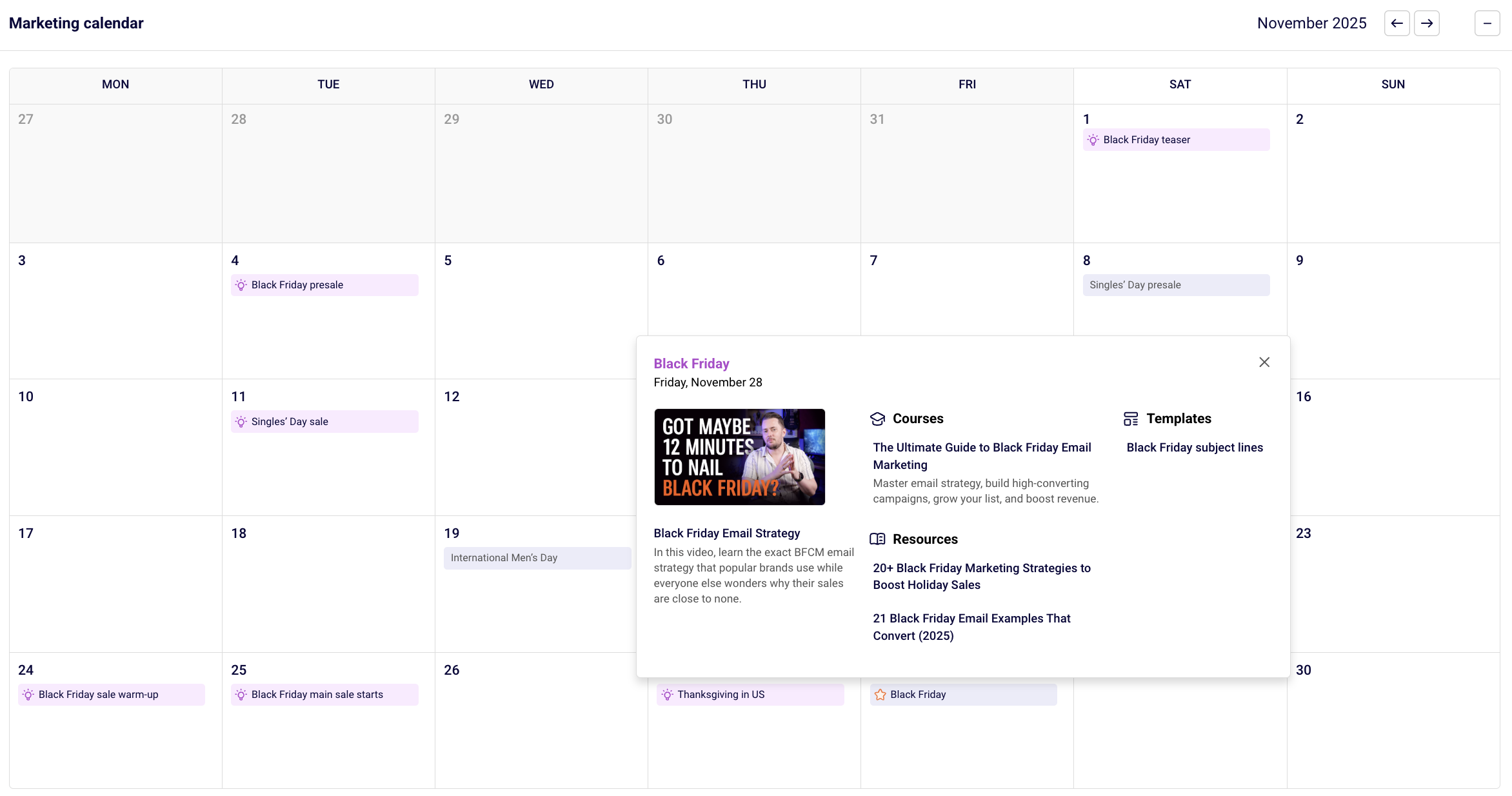
Plan your campaigns for any occasion with the integrated marketing calendar. This component shows upcoming holidays, seasonal events, and your scheduled campaigns all in one place.

The calendar displays:

  • Current month and year – Navigate between months using the left and right arrow buttons
  • Campaign status indicators – Color-coded labels showing:
    • SENT (green) – Campaigns that have been sent, with the number of campaigns in parentheses
    • SCHEDULED (orange) – Campaigns scheduled to send, with the count
  • Holiday markers – Important dates like Halloween, Thanksgiving, Black Friday, Diwali, and other seasonal events. These also include educational materials on marketing strategies for these holidays.
  • Your scheduled campaigns – Click on any date to see campaign details including email campaigns with their titles and SMS campaigns

When you hover over a date with multiple campaigns, you’ll see a preview showing individual campaign names and types (email or SMS). If there are more campaigns than can be displayed, you’ll see a “+1 more” or “+2 more” indicator.

Use the calendar to:

  • Plan campaigns around holidays and events
  • View your complete campaign schedule at a glance
  • Identify gaps in your marketing calendar
  • Create new campaigns for upcoming occasions

The calendar helps you stay organized and never miss important marketing opportunities throughout the year.

Learning center & tutorials

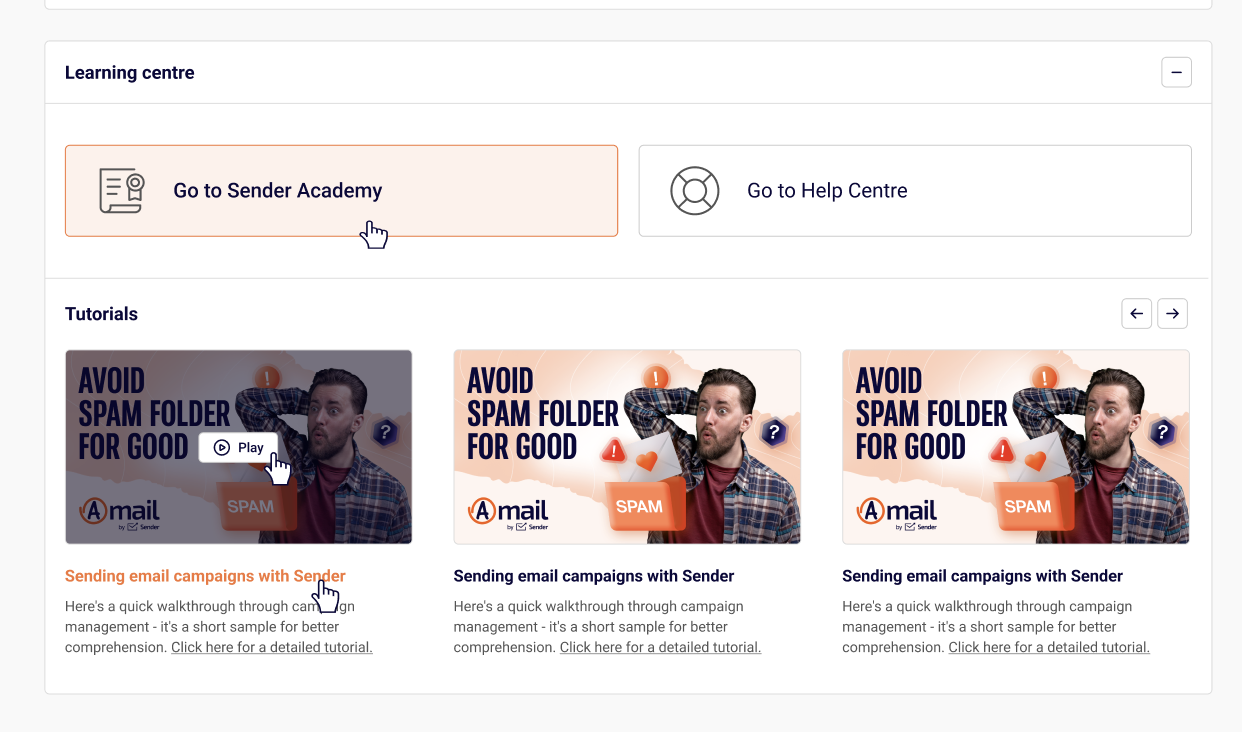
Access educational resources directly from your dashboard. This section includes two quick-access buttons at the top:

  • Go to Sender Academy – Access comprehensive courses, training materials, and in-depth guides
  • Go to Help Centre – Browse documentation, support articles, and step-by-step instructions

Below the quick-access buttons, you’ll find a scrollable carousel of video tutorials. Use the left and right arrow buttons to browse through available content.

Learn as you go and implement new strategies without leaving your dashboard. These step-by-step video tutorials make it easy to master Sender’s features at your own pace.

That’s it!

If you got stuck on a specific task or can’t find a way to execute a particular job, contact our support team via LiveChat or [email protected] – we’re here to help 24/7.

Premium capabilities Feels enterprise,
minus the price

All the features your business needs to acquire high-quality leads, grow sales, and maximize revenue from campaigns
using one simple dashboard.


Get Started For Free
shape 1
shape 2
shape 3
Sender logo
Product
Email marketing platformEmail marketingEmail automationBulk email senderEmail blast serviceNewsletter softwareText messaging serviceMarketing automationEmail templatesPricing
Features
Email campaignsDrag & drop email builderHTML email builderEmail A/B testingAudience segmentationEmail personalizationReports & AnalyticsLanding page builderAll features
Knowledge Base
Getting started with SenderGetting started with deliverabilityDomain authentication guideMarketing automation guideDrag & drop email builder guideIntegration guideSMS campaigns guidePayments & billingContact management guideGetting started with subscription forms
Support & Resources
Email marketing tipsHelp centerMigration serviceReport abuseTraining videosSender APIIntegrations
Company
Contact usAffiliate programTerms of serviceAnti-spam policyPrivacy policy
Get Started For Free
Trusted by 180,000 successful
businesses worldwide
Brand ratings
© 2012-2025 Sender.net
GDPR Compliant
ISO Certified
Secure Data Practices